Gardening in north Orange County, California
Showing posts with label Plant index: C. Show all posts

Monday, March 23, 2020

Theodore Payne "Hummingbird Mix"

A list with photos of the flowers included in the "Hummingbird Mix" seed packet -- "an assortment of annuals, perennials and low shrubs most attractive to hummingbirds, designed to keep hummingbirds in your garden year round" -- from the Theodore Payne Foundation. All images from Wikipedia or Wikimedia Commons.


Sunday, February 10, 2019

Theodore Payne "Meadow Mix"

These are the seeds in the "Meadow Mix" seed packet available from the Theodore Payne Foundation --


Saturday, July 25, 2015

False parasol mushroom


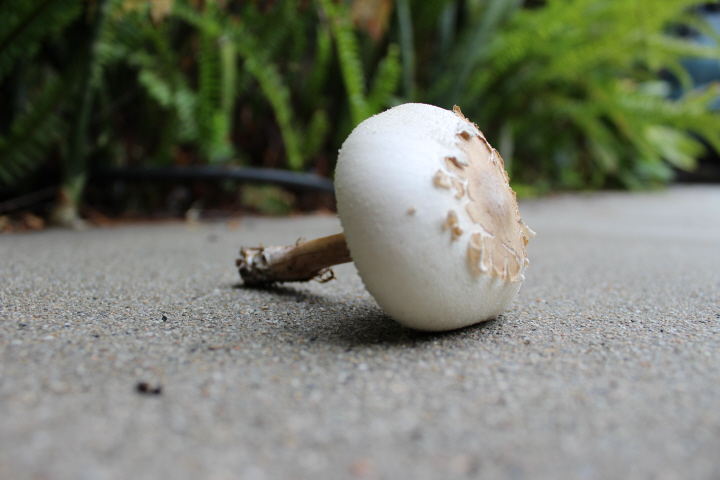
The false parasol (Chlorophyllum molybdites) is a very common and very toxic mushroom, often found in Southern California lawns.  Because its appearance is similar to the edible parasol mushroom, and because it is so often found in lawns, it is one of the most commonly-consumed poisonous mushrooms in North America. Apparently it will not kill you if eaten, but will make you very uncomfortably sick, with vomiting and diarrhea, so is best avoided altogether.

Interestingly, when I picked the mushroom, it looked like this,


and by the next morning the cap had opened and spread to this,


The brown scales had also begun to flake off -- it often looks like this while growing.

The ruler I used was not the best for this lighting, obviously -- this particular mushroom is about 4 inches (10cm) long, but can be found larger or smaller.


A distinctive characteristic of the false parasol is the greenish spores, which are beginning to be apparent in the photo, and came out quite clearly in the spore print I made -- the name "chlorophyllum" comes from the Latin chloro, green, + phyllum, gills.


For further reference, and other pictures to help you identify this toxic mushroom, see the Wikipedia article "Chlorophyllum molybdites", Tom Volk's "Fungus of the month" for August 1999, the C. molybdites pages at California Fungi and Urban Mushrooms.

Sunday, January 20, 2013

Camellia


An unidentified Camellia japonica, growing in our garden. This particular one is admirably hardy, having survived growing about a foot from the foundations of the house, for many years in utter shade while smothered with overgrown Cape hawthorn, being sawed off almost to the ground, and at least two termite tentings. The flowers have a tendency to wither rather quickly, but I have to admire its persistence.

This one is I think in the "formal double" shape, with its series of neatly overlapping petals, without revealing the stamens. The color is a salmon pink; I would say it is "Ed Combatalade" were it not for the pale pink stripes. Time to head over to Nuccio's, perhaps ...

Saturday, April 9, 2011

Wildflower garden


A very charming front garden in the Preservation District of Fullerton. Included are California poppies (Eschscholzia californica) and mountain garland (Clarkia unguiculata), both California natives.  Mountain garland -- the tall pink ones here -- are also known as elegant clarkia.

Monday, December 6, 2010

Christmas cactus


The Christmas cactus, Schlumbergera bridgesii, also found as S. buckleyi and Zygocactus truncatus, has arched, drooping branches of curiously flattened and jointed sections, growing as much as 3 ft. across (1 m), with long tubular and many-petalled blooms of purplish-red, red, pink, white, and even yellow, depending on the variety.  It can be grown outdoors in Sunset zones 16-17, and 21-24 in half-shade, or indoors in a cool but bright spot out of direct light.

I hesitate to jinx my luck by saying so, but I do almost nothing to this plant -- I don't feed it, I don't keep it in a dark spot in November to set its blooms for December, and I usually forget to water it regularly -- and yet it still rewards me with scores of blushed-white blooms in early December, and even here and there at other times of the year.  It is also absurdly easy to root new plants -- pinch off a section of stem and put it in water for a few weeks, or plant directly into a pot.

This photo was taken from underneath the plant, which sits on top of a bookcase near a north-west facing window.